Discover · Bernina Express
From palm trees to glaciers in two and a half hours.
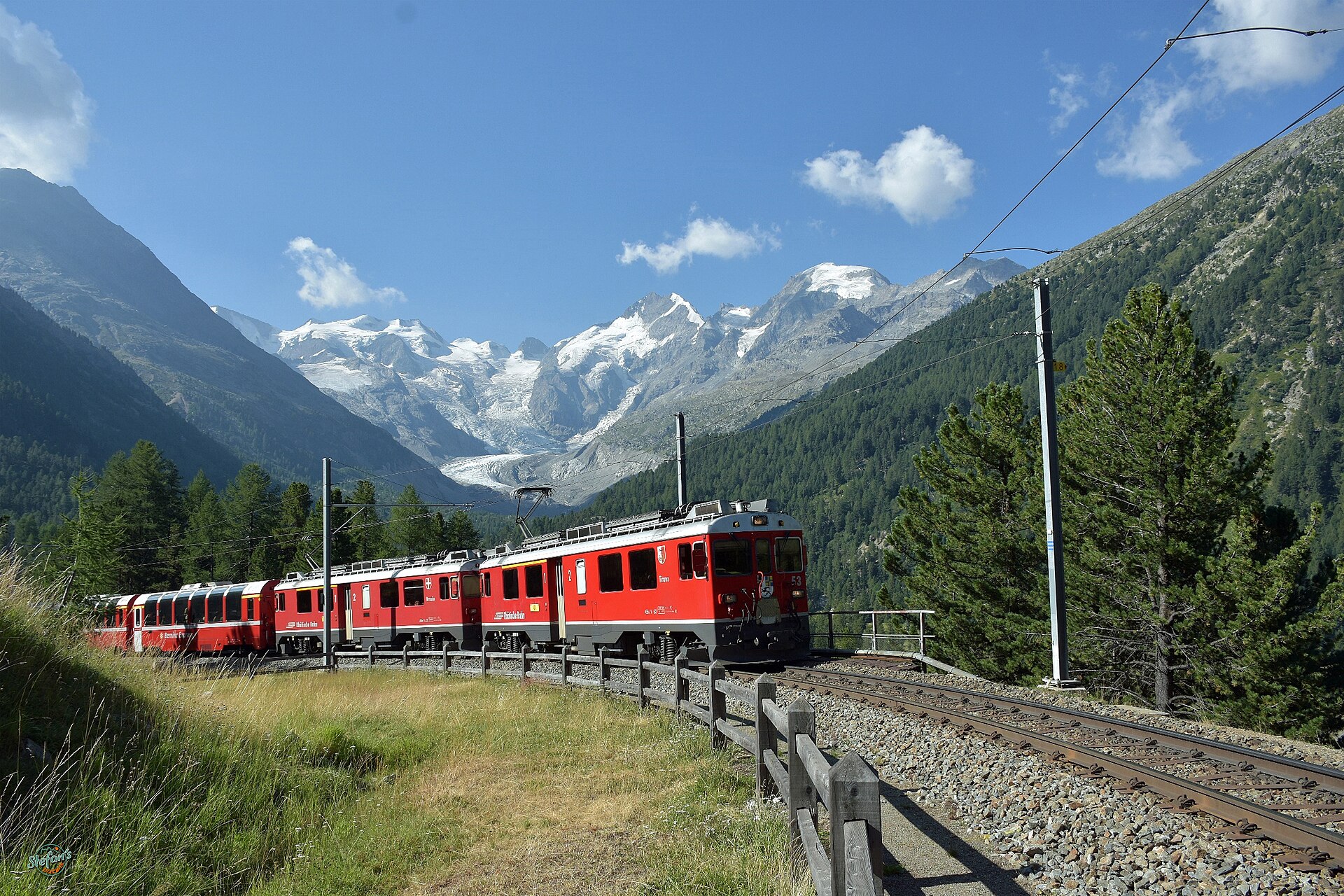
The little red train leaves Tirano at 429 metres and climbs to 2,253 at Ospizio Bernina before dropping down to St. Moritz. Here is what you see, which train to choose and what to know before boarding.
Why go
Because it is a UNESCO World Heritage railway that goes from the Valtellina to the glaciers of the Engadine in 61 kilometres, and the scenery is the same from the panoramic train and from the regional one.
When
All year: in winter the pass is white, in summer the lakes turn green and blue. The panoramic train between Tirano and St. Moritz runs more often in the summer season.
Good to know
You cross a border: bring a valid ID. On the Bernina Express a seat reservation is mandatory and paid on top of the ticket; on regional trains it is not. Check times and prices on the Rhaetian Railway website before you go.
In Tirano, in the Valtellina, the train sets off at 429 metres above sea level. An hour and a half later it is at 2,253 metres, beside a lake that in winter is a sheet of white. Then it rolls down to St. Moritz, at 1,775. In between lie 61 kilometres, gradients of up to 7 per cent and one of the most famous train rides in Europe.
The line was completed on 5 July 1910. Since 2008 it has been a UNESCO World Heritage Site together with the Albula line, which carries on from St. Moritz to Thusis. The listing is not for a train but for the railway and the landscape it crosses, which is why it holds for whichever train you board.
The route, stop by stop
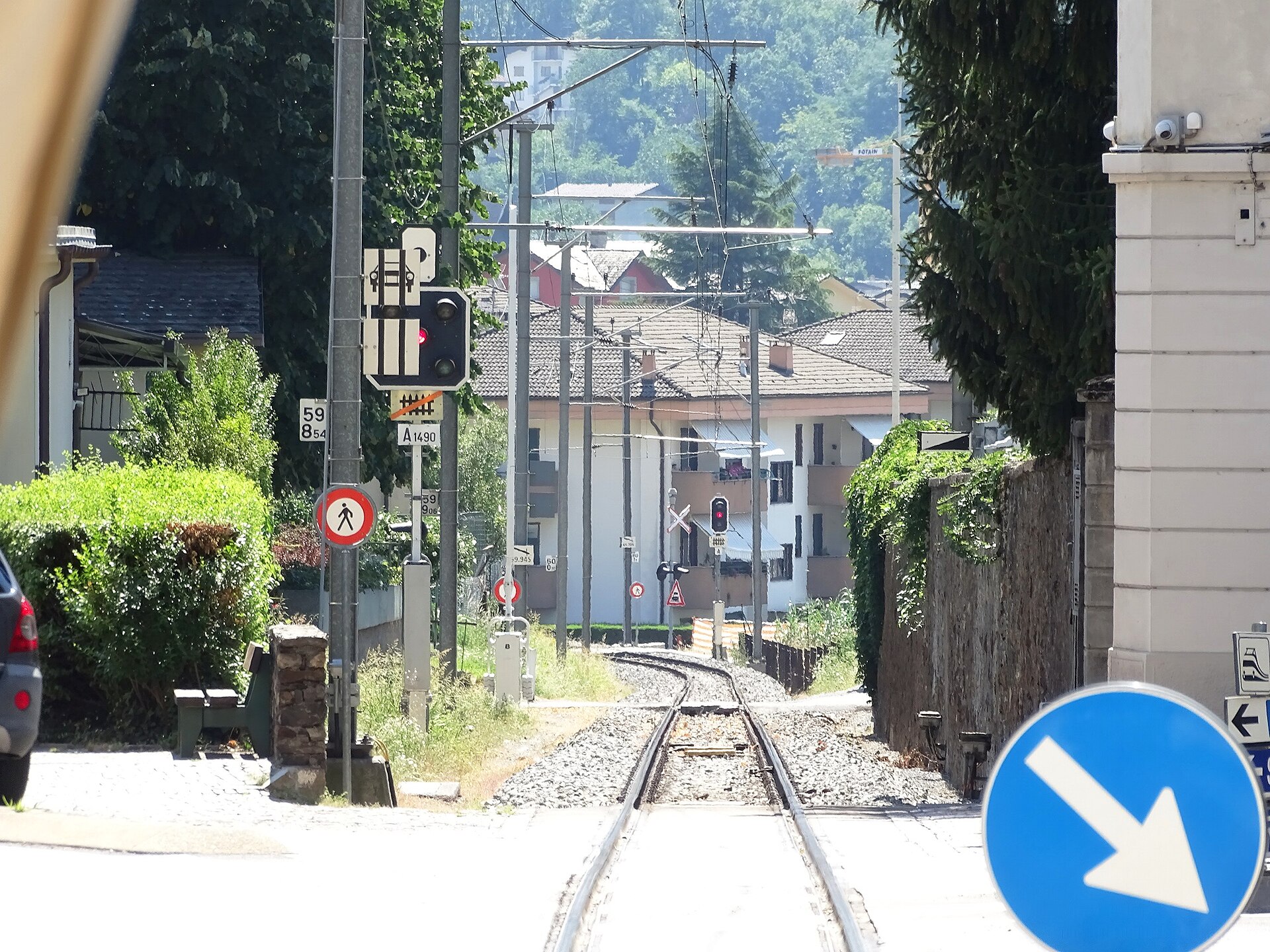
You leave Tirano and within minutes you are in Switzerland: the first station is Campocologno, at 553 metres, where customs is.
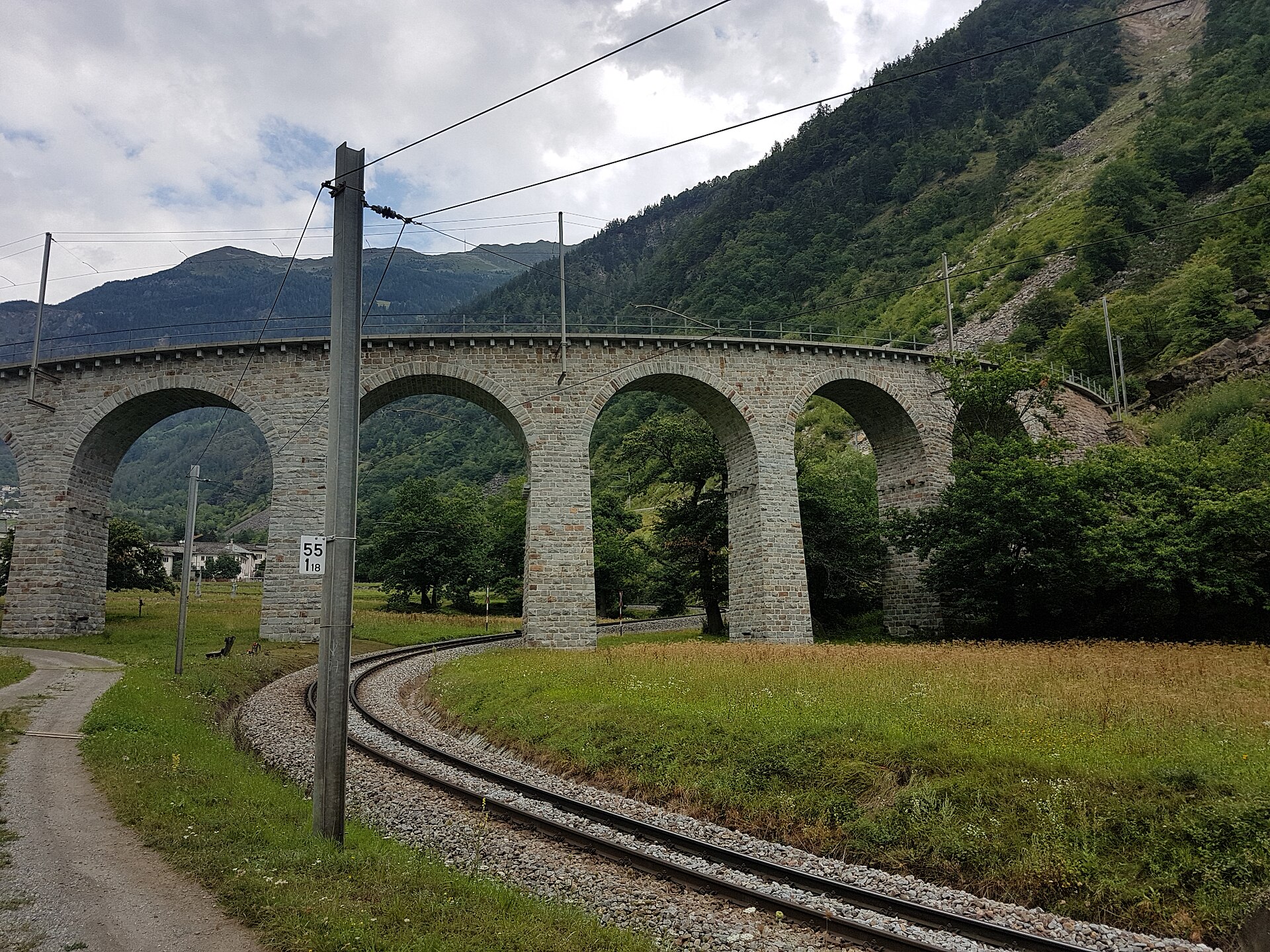
At Brusio, at 780 metres, comes the line's best-known image: the spiral viaduct. The train draws a full circle on a stone bridge of arches to gain height in very little space. From the window you watch the track you have just travelled pass beneath you.
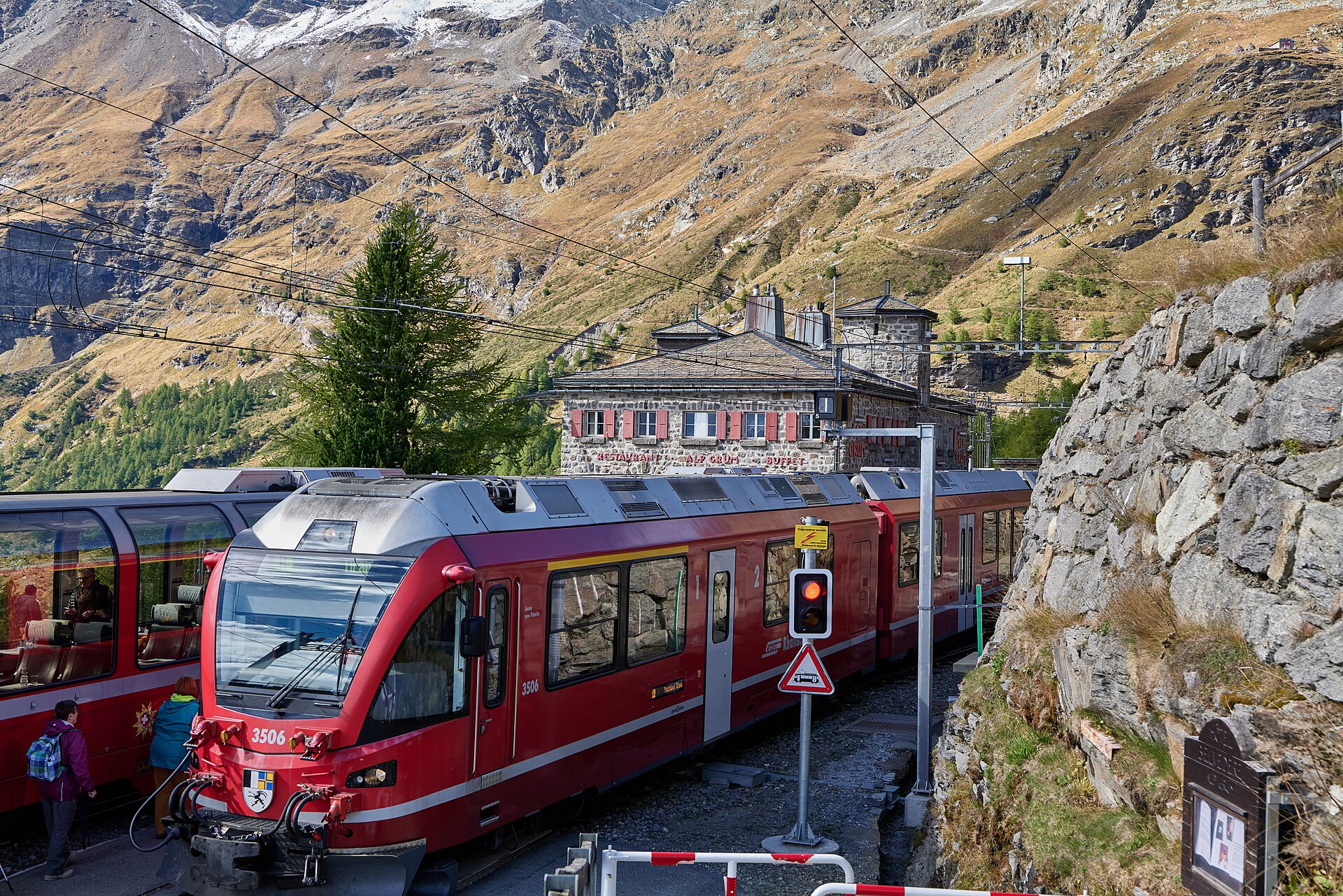
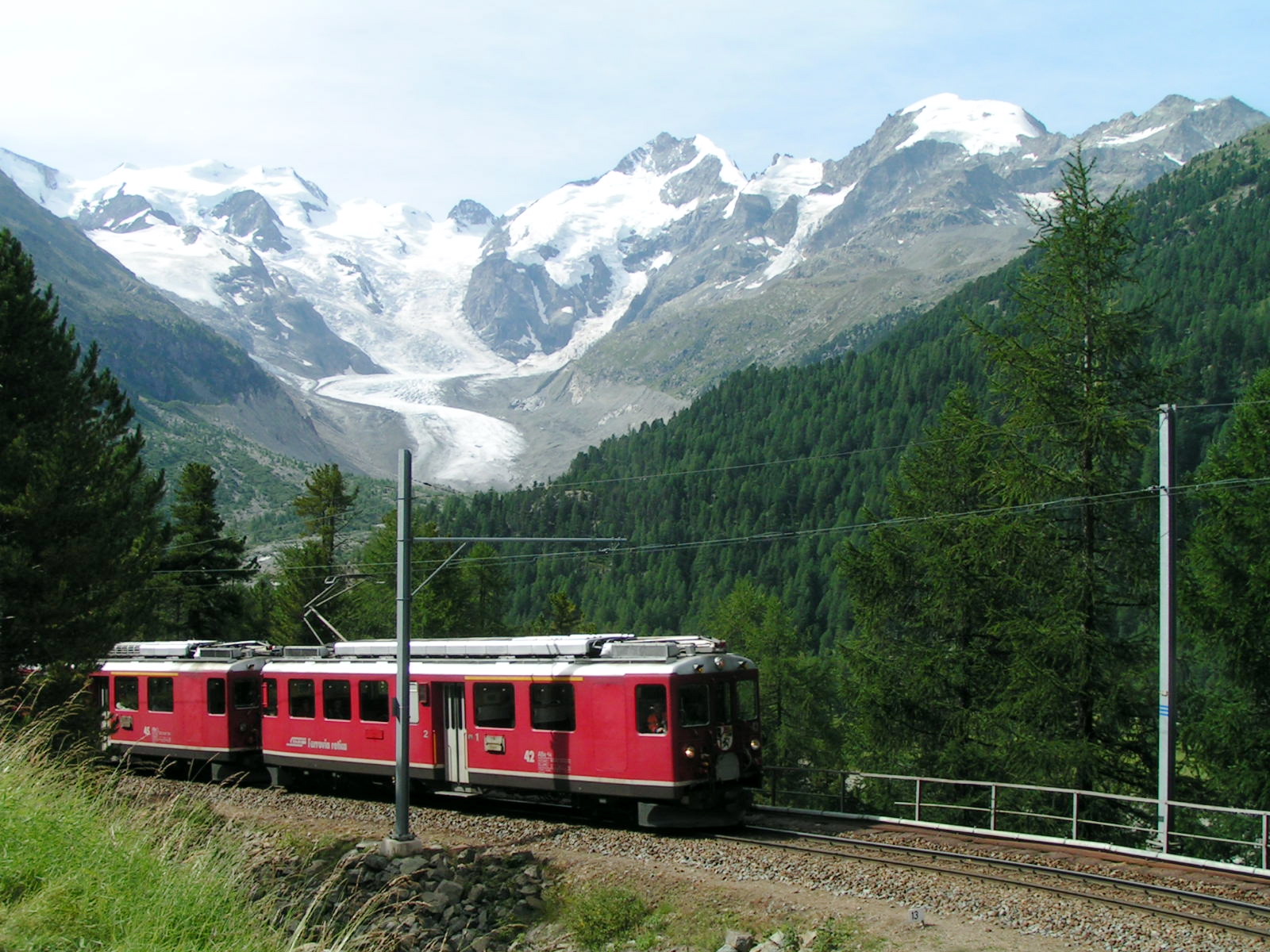
Then the valley opens. At Le Prese, 964 metres, the train runs along the shore of Lake Poschiavo, and Poschiavo itself follows at 1,014. The real climb starts here, through woods and hairpins, up to Alp Grüm at 2,091 metres: a lonely station with a glacier straight ahead.
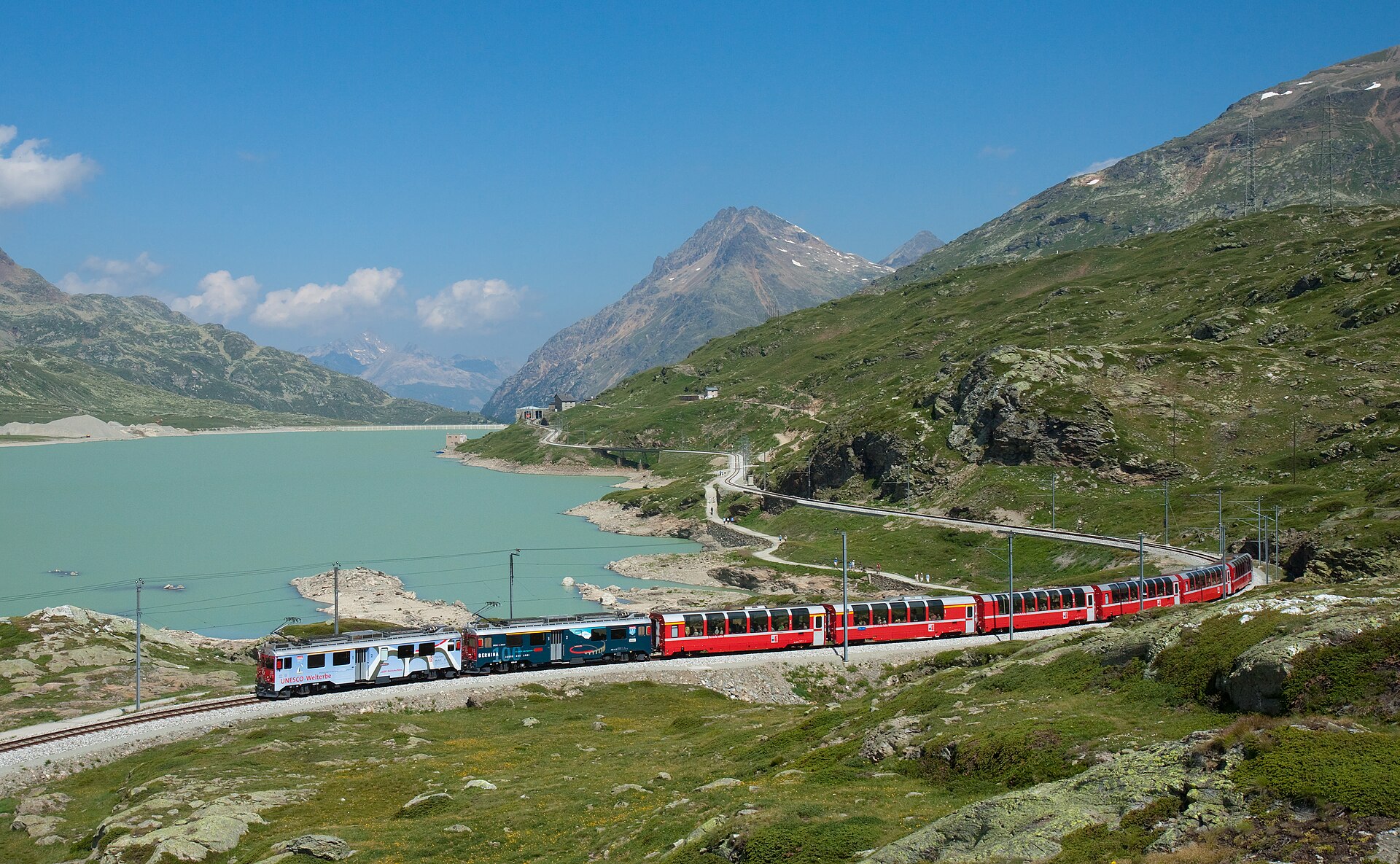
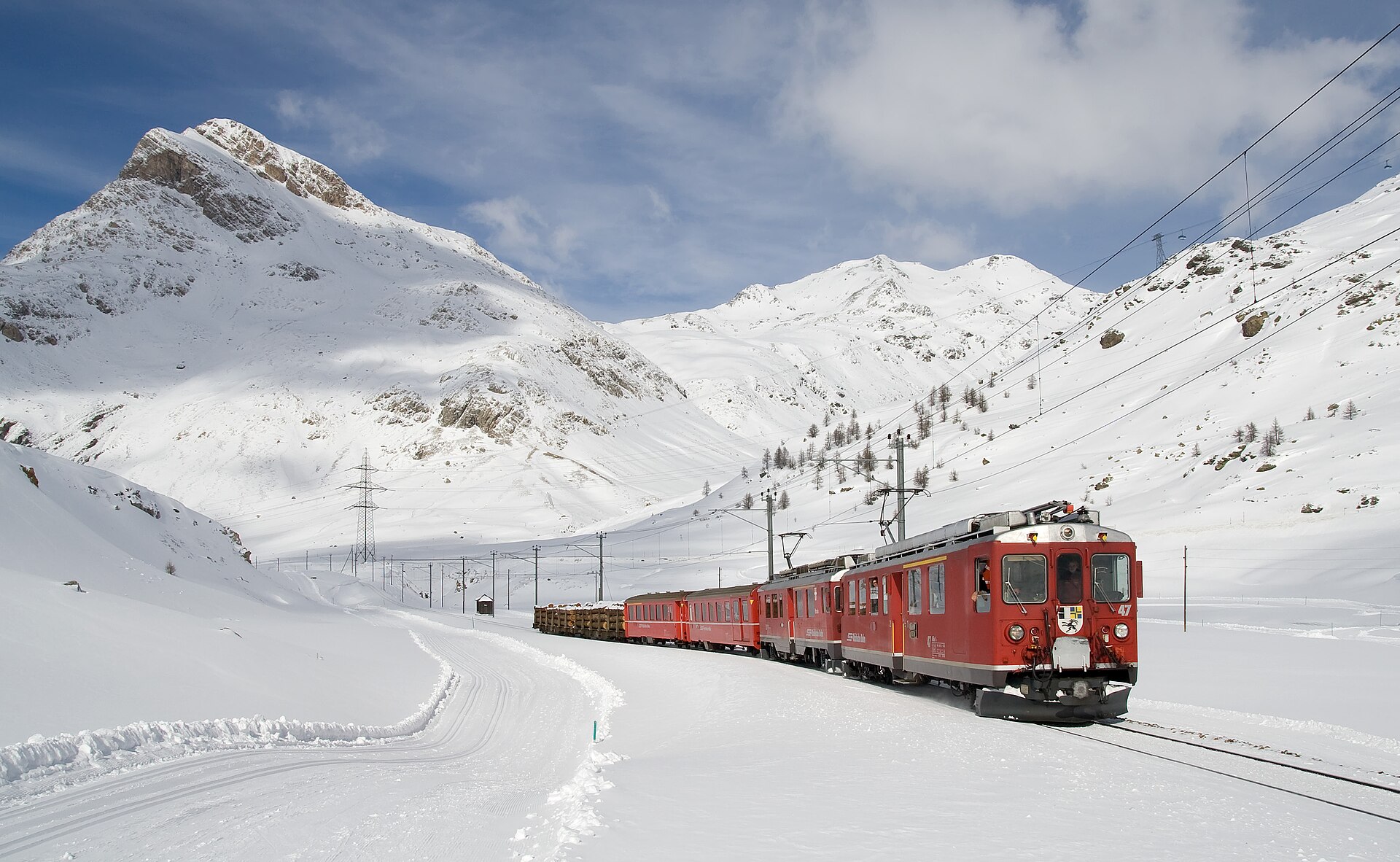
The highest point is Ospizio Bernina, at 2,253 metres, on the shore of Lago Bianco. Past the summit the line drops into the Engadine: Bernina Diavolezza, at 2,093 metres, where a cable car goes up to Diavolezza at 2,921; then Morteratsch, Pontresina at 1,774 and finally St. Moritz.
Bernina Express or regional train
Two kinds of train use the same line, and this is the choice that matters most.
The Bernina Express is the panoramic train, with windows that curve up into the roof. A seat reservation is mandatory and you pay a supplement on top of the ticket. The windows do not open: great for looking, less so for photographs.
Regional trains follow exactly the same route. No reservation is needed, the windows open, and you can get off at a stop and catch the next train. If you want to pause at Alp Grüm or walk beside Lago Bianco, this is your train.
In short: the UNESCO scenery is identical. What changes is the experience on board.
How long it takes and how to plan
Tirano to St. Moritz takes about two and a half hours. A same-day return is possible, but it is a full day: leave early and keep a couple of hours for St. Moritz or Pontresina. With more time you can continue on the Albula line to Chur: from Chur to Tirano the Bernina Express takes a little over four hours.
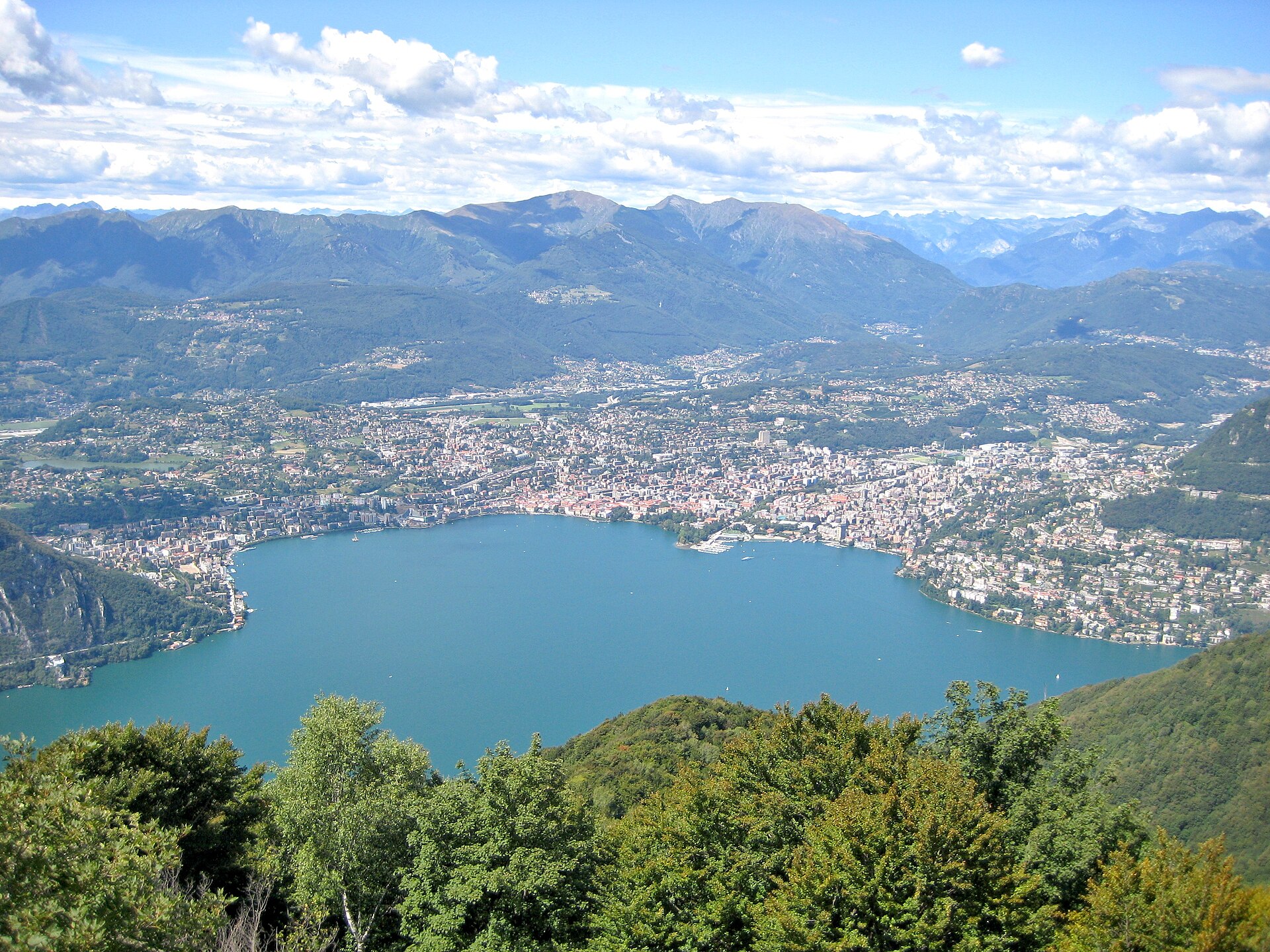
In summer there is also the Bernina Express Bus between Tirano and Lugano, a way to link the train with Ticino without doubling back.
Which season
In winter the pass is all snow, and the red train against the white is the picture everyone wants. In summer you get the colours of the lakes and can step off for a walk. There is no wrong season: they are two different journeys on the same line.
What nobody tells you
There is no right side to sit on: the line twists so much that the view comes round to both. A clean window matters more, and on the regional train, one that opens.
Photos
- Stefans Pixmix · CC BY-SA 4.0 · Wikimedia Commons
- Abxbay · CC BY-SA 4.0 · Wikimedia Commons
- Rikki Mitterer · CC BY-SA 4.0 · Wikimedia Commons
- Leonhard Lenz · CC0 · Wikimedia Commons
- Kabelleger / David Gubler ( http://www.bahnbilder.ch ) · CC BY-SA 3.0 · Wikimedia Commons
- Rainer Göttlinger, Nürnberg · CC BY-SA 3.0 · Wikimedia Commons
- Kabelleger / David Gubler · Public domain · Wikimedia Commons
Sources
- Svizzera Turismo: scheda Bernina Express (durate e stagioni)
- The Wom Travel: il Trenino Rosso del Bernina
- The Wom Travel: il Trenino Rosso in inverno
- Visit Italy: Bernina Express, UNESCO dal 2008
- in-Lombardia: Bernina Rhaetian Train, UNESCO site
- Aprica Online: Bernina Red Train
- Il Turista: le fermate da Tirano a St. Moritz
- Conociendo Italia: Bernina Express, regionale e panoramico
- Wikipedia: Bernina Express